|
|
|||||||||||||||||||||||||||||||||||||||||||||||||||||||||||||||||||||||||||||||||||||||||||||||||||||||||||||||||
|
|
|||||||||||||||||||||||||||||||||||||||||||||||||||||||||||||||||||||||||||||||||||||||||||||||||||||||||||||||||
|
Peru |
|||||||||||||||||||||||||||||||||||||||||||||||||||||||||||||||||||||||||||||||||||||||||||||||||||||||||||||||||
|
Peru's exports of sawn wood and
mouldings -
(HS codes 4407 & 4409) China's imports of sawn wood from Peru -
"by location of
importer"
The USA's imports of sawn wood
& mouldings from Peru
EU member states' imports of sawn wood
& mouldings from Peru 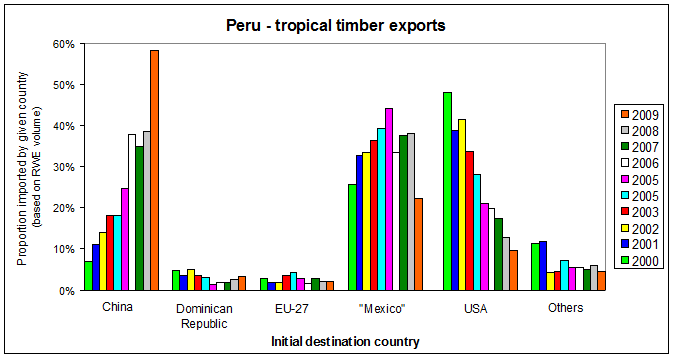 China's
imports of sawn wood and mouldings from Peru compared against Peru's
exports of sawn wood and mouldings to China (including Hong Kong)*
Source:
[Footnote
2].
*
Most of what is exported to Hong Kong (other than from China) is
in transit to China
|
|||||||||||||||||||||||||||||||||||||||||||||||||||||||||||||||||||||||||||||||||||||||||||||||||||||||||||||||||
|
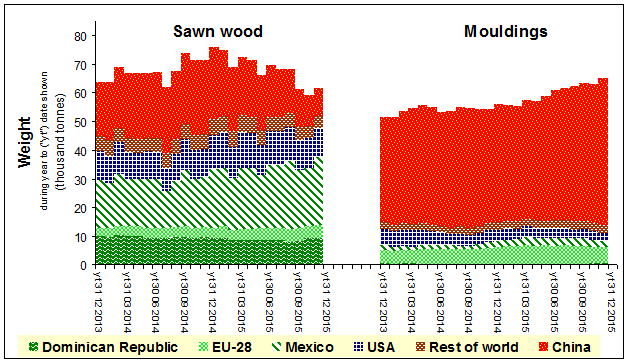
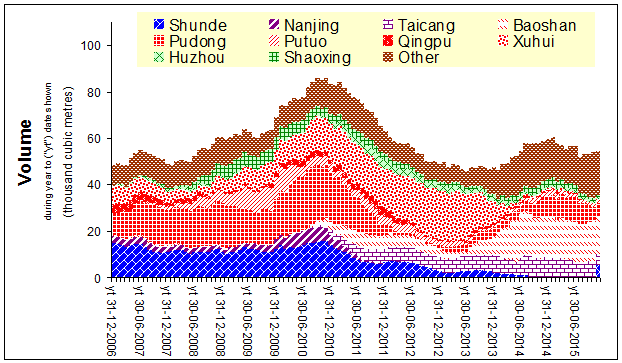
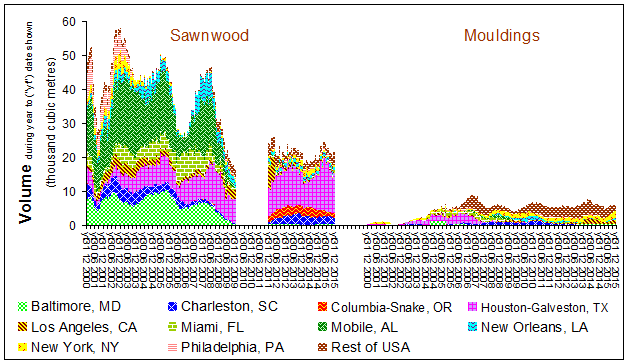
China, Mexico and the USA dominate the market for Peru's timber exports. The proportion exported to China increased rapidly last decade - offsetting a reduction in direct exports to the USA. It is likely that much of the timber exported from Peru to Mexico subsequently enters the USA, perhaps after processing in free trade zones "maquiladora". The mix of species in the timber exported to China differs from that exported to Mexico and the USA - China's interest tends to be in species for flooring whereas the market in Mexico and the USA tends to focus on caoba (big leaf mahogany Swietenia macrophylla) and cedro (red cedar cedrella odorata) which tend to be used in furniture. Caoba and cedro[-] are respectively listed in Appendices II and III under CITES. Peru is a range state for a number of other species which are recommended for listing under CITES.[p11 et seq] During last decade, Peru failed to comply with its obligations under CITES concerning production of caoba, bringing CITES into disrepute.[NRDC] Rather than present "non-detriment findings" in support of the volumes being logged, Peru has subsequently reduced the volume which it deems sustainable. After a few years of concern about the Peruvian government's willingness to comply with converntion concerning caoba, it now appears that the CITES Secretariat is more satisfied with progress.[Item 19] Forest policy has recently changed - the scale and duration of new logging concessions is now supposed to be sufficient to ensure sustainable management of the existing forest. The aims of the logging group which is said to have acquired a large share of the total area of these new concessions would be easier to assess if the inventory of tree speciese which has presumably been prepared in order to enable the group decide whether and how much to bid for those concessions were available to the public. Given that that group is a leading supplier of caoba to the USA,[-][-] one might expect the concessions to be rich in this species and that the group wishes to ensure long term access to legal supplies of caoba thereby reducing the risk of its exports to the USA being in breach of the Lacey Act (which, inter alia, makes it a criminal offence to import illegal timber into the USA). Unfortunately, lack of transparency concerning aspects of the concession allocation process will not greatly reduce perceptions that timber from these concessions is much less likely to warrant being descibed as Illegal Timber than timber from elsewhere in Peru.[-] Further, the Lacey Act seems to be failing to prevent illegal timber from Peru entering the USA - including that which has CITES permits.[-] In effect, all the timber which is declared in Peru as exports of mouldings (i.e. those listed under code 4409 in the United Nations Harmonised System for the classification of commodities) destined for China is declared in China as sawn wood (i.e. under HS code 4407). If the reason for this difference in classification minimises the amount payable as export taxes in Peru[4409291* & 4409292*] and/or import taxes in China[44092910 & 44092920] then this would imply systematic fraud. Given that similar discrepancies are manifest in statistics of other countries' exports to China, the reason might merely be classification - China not recognising the extent to which the sawn wood is processed as sufficient to warrant being described as mouldings. However, the classifications used by both Peru and China should - under UN / World Customs Organisation rules - be the same (for codes of up to four HS digits). It is unlikely that the difference is attributable to efforts to bypass CITES - which requires export and import permits for countries which trade Swietenia macrophyla and Cedrela odorata in the form of sawn wood (HS code 4407) but not mouldings (HS code 4409) - as reflected in the CITES trade database and other market information, those species seem to account for very little if any of the timber which is traded from Peru to China. It is also unclear why the total quantity of sawn wood and mouldings which Peru declares as exports to China tends to be roughly twice as great as that which China declares as imports from Peru. It is unlikely that much of the discrepancy is attributable to the substantial quantities of timber which are said to be smuggled from Brazil into Peru. The expansion in China's interest in Peru follows closely efforts by the Indonesian government more seriously to implement the law - particularly in relation to the production of timber of the species merbau (Intsia spp.). Imports of Illegal Timber from Indonesia will have contributed greatly to the expansion of China's parquet industry during the first half of last decade.[pages 40 & 41] It is likely therefore that China's parquet industry sought to substitute cheap (implicitly illegal) imports from Indonesia with comparable supplies from Peru. As part of a remarkable loan from the World Bank's International Finance Corporation and an associated loan from a multi-national investment bank, one of China's largest parquet groups - which has sales offices in the USA[-][-] and no doubt anxious about the Lacey Act - is receiving assistance concerning its supplies from Peru.[-] The loan agreement is to be cancelled if by fixed dates, the proportion of the group's sales which is not credibly certified as legal or sustainable is below amounts agreed at the outset. Shortly after the signing of Free Trade Agreements between Peru and the USA and separately China, there was a major escalation in violence between the authorities (propmoting the extractive industries in general) and local people in forest areas the former disrespecting the rights of the latter. Prior to this, there had been numerous reports of violence and intimidation, particularly in indigenous people's territory, by small groups of illegal loggers (who are likely to have been on commission to supply export markets through powerful intermediaries. Although the FTA with the USA includes an Annex which provides good safeguards against illegal and/or unsustainable production and trade in timber, it seems that the Annex is being ignored.[Appendix 1] [-] Further insights: |
|||||||||||||||||||||||||||||||||||||||||||||||||||||||||||||||||||||||||||||||||||||||||||||||||||||||||||||||||
|
Copyright
globaltimber.org.uk
|
|||||||||||||||||||||||||||||||||||||||||||||||||||||||||||||||||||||||||||||||||||||||||||||||||||||||||||||||||