|
|
||||||||||||||||||||||||||||||||||||||||||||||||||||||||||||||||||||||||||||||||||||||||||||||||||||||||||||||
|
|
||||||||||||||||||||||||||||||||||||||||||||||||||||||||||||||||||||||||||||||||||||||||||||||||||||||||||||||
|
Mozambique
|
||||||||||||||||||||||||||||||||||||||||||||||||||||||||||||||||||||||||||||||||||||||||||||||||||||||||||||||
|
China's imports of logs and sawn wood from Mozambique (by
Customs District) Imports of logs and sawn wood from Mozambique
declared by China
Source: General Administration of Customs of the People's Republic of China (including China Customs Statistics Yearbook) Volume (thousand cubic metres)
Import value (US$ million, cif, nominal)
Monthly statistics for the volume and import value of the logs which China imports from Mozambique (and other countries) can be downloaded by clicking here. Trade in logs and sawn wood from Mozambique
to China
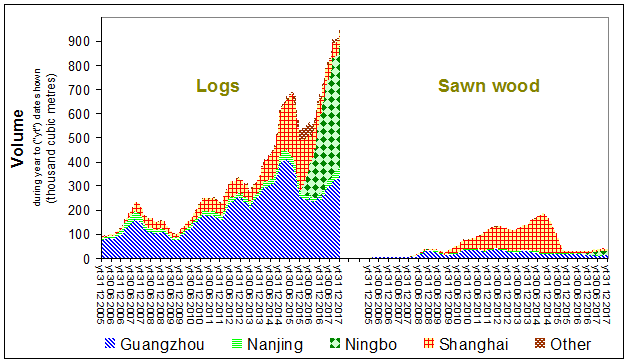
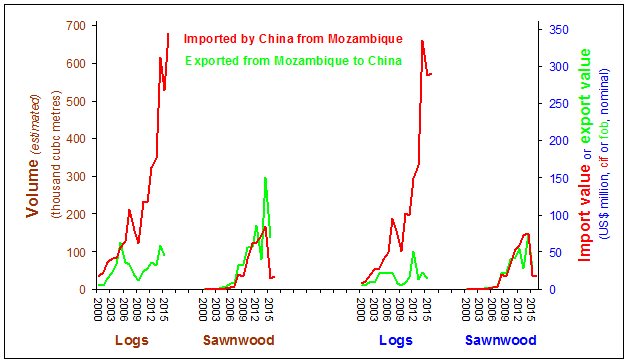
Mozambique Mozambique's customs statistics suggest that almost 42,000m3 of logs and 219,000m3 of sawn wood were exported worldwide from Mozambique during 2012. However, China seems to have imported eight times as much that volume of logs from Mozambique and a similar volume of sawn wood. This tends to suggest extensive fraud or unreported exports from Mozambique - a trend which seems to be increasing. China accounts for almost all the timber exported from Mozambique, and logs comprise the great majority of those exports. Per cubic metre of logs, import values increased from about US$250/m3 to roughly US$450/m3 between 2000 and 2008. In contrast, export values appear to have varied about an average of US$150/m3 (using UN Comtrade as the source of export values and China's import statistics for volume). Although this might imply (increasing) transfer pricing fraud, transportation costs rose very substantially towards the end of that period [Ocean Freight Index]. The majority of China's supplies of logs from Mozambique are declared as imports for enterprises located in Guangdong province (whose timber industry is characterised particularly by the manufacture of wooden furniture). The provinces of Shanghai and, to a lesser extent, Zhejiang accounted for a substantial proportion of the total imported, particularly from the end of 2006 to near the end of 2007. The province of Beijing accounted for most of the remainder. The data which appear anomalous in the chart are attributable to logs declared as imports for enterprises located in Beijing Chaoyangqu (February 2007), Shanghai Xuhiuqu (February and June 2007), Zhejiang Wenzhou (August 2007), Zhejiang Huzhou (September 2007), and Guangdong Guangzhoushi (April 2006 and April 2007). Note: corresponding import value data show the same pattern (- there are no apparent anomalies in import value per unit of wood volume).
Suggested reading: |
||||||||||||||||||||||||||||||||||||||||||||||||||||||||||||||||||||||||||||||||||||||||||||||||||||||||||||||
|
Copyright
globaltimber.org.uk
|
||||||||||||||||||||||||||||||||||||||||||||||||||||||||||||||||||||||||||||||||||||||||||||||||||||||||||||||