|
|
|||||||||||||||||||||||||||||||||||||||||||||||||||||||||||||||||||||||||||||||||||||||||||||||||||||||||||||||||||||||||||||||||||||||||||||||||
|
|
|||||||||||||||||||||||||||||||||||||||||||||||||||||||||||||||||||||||||||||||||||||||||||||||||||||||||||||||||||||||||||||||||||||||||||||||||
|
Democratic Republic of Congo
|
|||||||||||||||||||||||||||||||||||||||||||||||||||||||||||||||||||||||||||||||||||||||||||||||||||||||||||||||||||||||||||||||||||||||||||||||||
|
China and the EU's imports of timber from DR Congo
Source: based on General Administration of Customs of the People's Republic of China and Eurostat 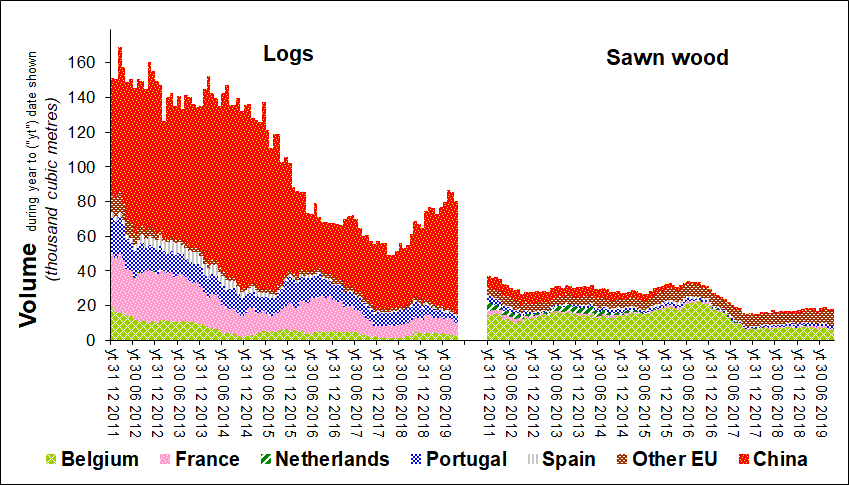
China's imports of logs from DR Congo - by "location of importer" Source: based on General Administration of Customs of the People's Republic of China 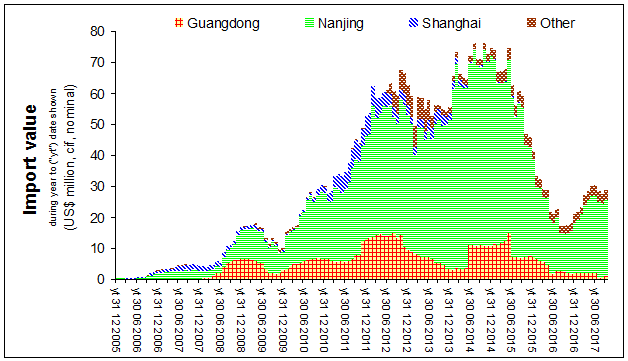 China's imports of logs from DR Congo - by "customs district" Source: based on General Administration of Customs of the People's Republic of China 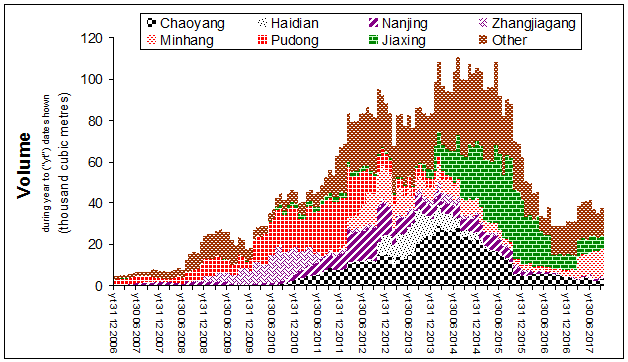 
Imports
of logs from the Democratic Republic of Congo declared by China
Source: China Customs.
|
|||||||||||||||||||||||||||||||||||||||||||||||||||||||||||||||||||||||||||||||||||||||||||||||||||||||||||||||||||||||||||||||||||||||||||||||||
|
During 2013, a consignment of timber from Democratic Republic of Congo was impounded in Belgium - after receiving detailed allegations of its illegal provenance. Belgian authorities asked their counterprarts in DR Congo to check the legality of that consignment. The latter replied that, officially, the consignent was legal. The Belgian authorities considered that continuing with the case would be contrary to the EC's Regulation 995/2010 (the "EUTR") - which not only prohibits the placement of illegal wood-based products on the EU market but also requires due diligence concerning the provenance of those products. This and other precedents (from Brazil) expose a major loophole in the EUTR. It implies that "operators" in the EU do not need to bother about due diligence upstream from where official monitoring of supply chains starts. FLEGT-licensing under the EU-Indonesia VPA tends to confirm this - it allows negligence of the well-known fundamental illegalities (especially concerning land-use change) which might take place prior to the allocation of permits to clear or log forests. Much of the timber which China is currently importing is likely to illegal - deriving from artisanal coups being logged illegally by Chinese enterprises, particularly in Bandundu. Such coups are in any even not intended for export. Indeed local communities would very much like robust governance of their forests - in order to protect these from such theft. This need has been expressed particularly in Oriental province. Forest cover statistics (often highly misleading) indicate that the DRC has the largest forest area in Africa. However, the remoteness and terrain of the country's remaining forests are major disincentives to the evolution of legal industrial logging. Annual production by industrial logging has rarely exceeded 250,000 cubic metres even when the DRC (then Zaire) was at its most politically stable and when road and rail links from Kinshasa to the coast were well maintained. During 2006, the roundwood equivalent volume exported is reported to have exceeded production [Annexe 3 and Annexe 4]. The World Bank and others have promoted the impression that c20 times this amount should be the target of forest policy in the DRC (and that there is no need to take into account the views - or solicit the support - of forest people and civil society). Indeed the World Bank has been reprimanded by its Inspection Panel for its performance in the DRC's forestry sector - including its funding of road and bridge rehabilitation projects in Orientale province[p134] which have greatly facilitated access by artisanal loggers (most of whom are said to be indentured by entrepreneurs from Uganda and Kivu province to provide cheap timber in exchange for chain saws and basic needs). Roughly 25,000 cubic metres of sawn wood produced by those artisanal loggers is supplied annually to each of Uganda and Kenya - severely distorting those countries' timber market (which have collapsed largely due to poor governance and lack of policy interest). Militia, which controlled most of eastern DRC's timber production during the civil war, still have a substantial interest in the production and transportation of that sawn wood. Equivalent to 150,000 cubic metres of roundwood, thost supplies are of a similar order of magnitude to the total produced by industrial logging. Little if any of the former is exported from Africa, because, by the time it reaches the east coast, it is more expensive than comparable supplies from industrial logging exported from such Atlantic ports as Matadi, Pointe Noire and Douala. Some years ago, the EU and the DRC have launched negotiations with a view to a Voluntary Partnership Agreement in which all timber exports from the DRC would be demonstrably legal. DRC could receive up to €3.5 million for participating in the negotiations. As elasewhere, those negotiations have stalled (perhaps because due to weak legislation - vis the USA's Lacey Act - or weak implementation - vis the EC's regulation 995/2010). It appears that the (former) Minister for the Environment (who signed the declaration to negotiate the VPA) approved five logging concessions[p4] which had previously been declared illegal. One of the two enterprises to which those concessions have been allocated is alleged by the US Treasury to be owned by a family some of whose members it alleges have raised funds for what the it regards as a terrorist organisation. The family in question deny these allegations. The legality of almost 21 million hectares of concessions have been assessed[Annexe 1] and most have been declared illegal. Those issued most near to the cut-off date of the national review of logging concessions were of course most likely to be opportunistic / suspect - COCAF, OLAM and Yang Shushan. The latter might contribute less than it should to the Treasury if it has been issued as a quid pro quo for a contract to provide electrification services (electrical engineers are not known for their expertise in sustainable forest management), or, as is conceivable, if it (/he) represents Sinopec, one of China's powerful petrochemical groups (which are said to facilitate China's imports of logs). Under the name of New Star Worldwide, Yang Shushan was permitted to list on the NYSE Euronext exchange in Paris subsequent to DRC declaring that what appears to be the new company's primary asset - its concession - is illegal. The source and legality of the timber[p22] which Sustainable Forest Holdings, which, through a subsidiary (Susfor-Oasis), has been admitted as a member of the GFTN, claims to be importing from DRC is unclear. The IFC has been obliged to withdraw its support for OLAM on account of OLAM's operations in DRC. Olam acquired the concessions of CIB in neighbouring Congo (Brazzaville) from DLH during 2010 - some of these were FSC-certified at the time of acquisition, which will help Olam improve its public image (at least until the FSC-certificates are reassessed). Afrormosia Pericopsis elata - listed in CITES Appendix II (to help assure long term trade) - accounts for much of the timber exported from eastern DRC (but less than the CITES quota). Much is likely to be illegal - it has probably not been credibly certified by the DRC's CITES Management Authority (due to the absence of national government in the region). One of the first allegations acted on by a Competent Authority under EC Regulation 995/2010 concerned the import into Belgium of a consignment of Afrormosia from DRC. Remarkably, CITES authorities have chosen to exclude this species from a "Review of Significant Trade". The EU and World Bank have supported the rehabilitation of the road (but not the safer and more environmentally sound railway) between Kinshasa and the coast. Once complete the - in effect - new route would remove a major impediment to the expansion of the logging industry and consequently have a substantial social and environmental impact in forest areas upstream of Kinshasa. This appears not to be taken into account by those who fund the rehabilitation work (and who therefore subsidise the DRC's timber industry - which will probably be one of the (sic) heaviest users of this road). The
Timber Trade and Poverty Alleviation Upper Great Lakes Region
by Forests Monitor (2007) |
|||||||||||||||||||||||||||||||||||||||||||||||||||||||||||||||||||||||||||||||||||||||||||||||||||||||||||||||||||||||||||||||||||||||||||||||||
|
Copyright
globaltimber.org.uk
|
|||||||||||||||||||||||||||||||||||||||||||||||||||||||||||||||||||||||||||||||||||||||||||||||||||||||||||||||||||||||||||||||||||||||||||||||||
